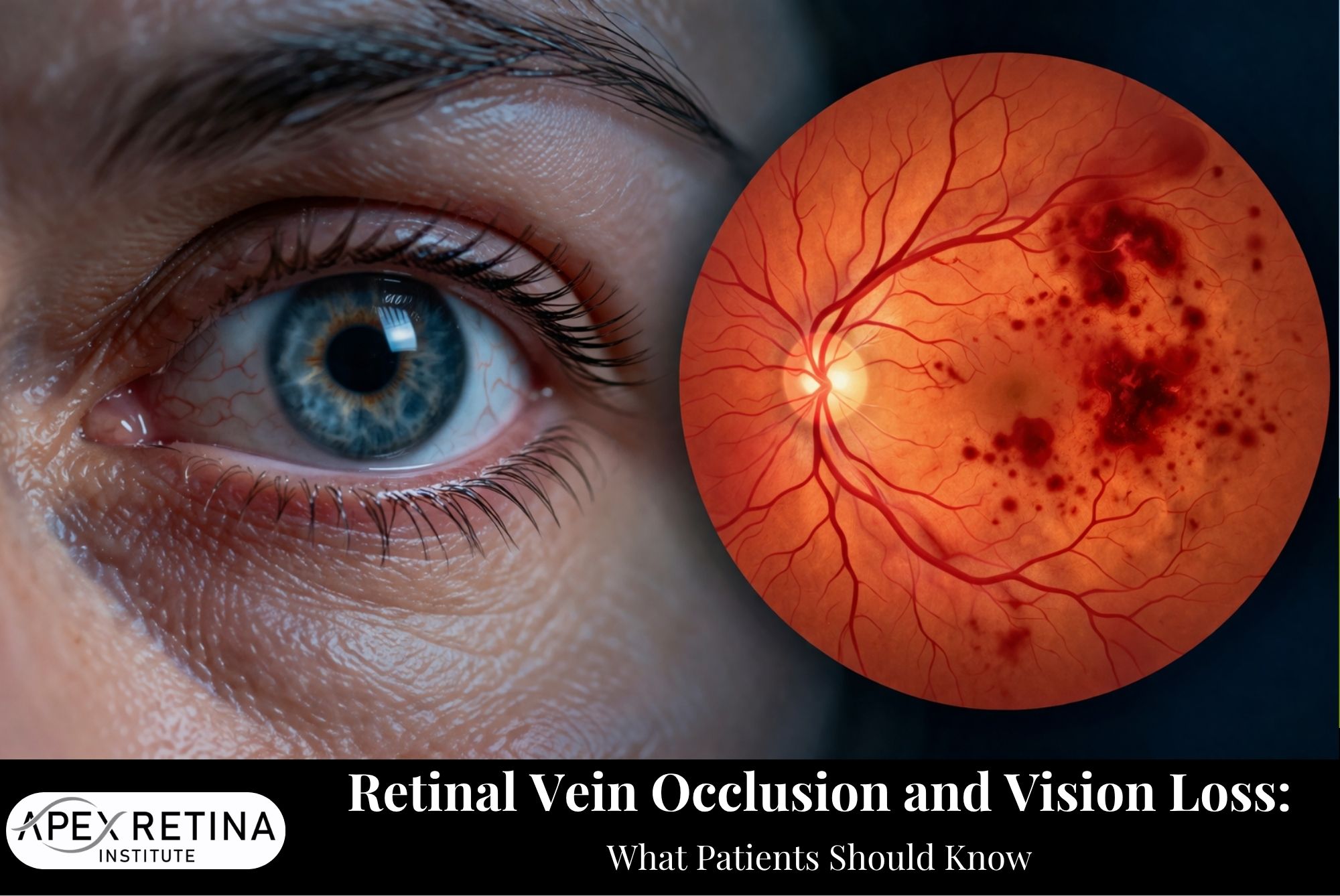
Vision is one of our most valuable senses, yet many eye conditions can threaten it—often without warning. One such condition is Retinal Vein Occlusion (RVO), a common vascular disorder of the retina that can lead to sudden or progressive vision loss. At Apex Retina Institute, we specialize in diagnosing and treating retinal conditions with advanced, patient-centered care.
What Is Retinal Vein Occlusion?
Retinal Vein Occlusion occurs when a vein in the retina becomes blocked, preventing proper blood flow. This blockage can lead to swelling, bleeding, and damage to the retina—the light-sensitive tissue at the back of the eye.
There are two main types of RVO:
- Central Retinal Vein Occlusion (CRVO): A blockage in the main retinal vein
- Branch Retinal Vein Occlusion (BRVO): A blockage in one of the smaller branch veins
Both types can significantly impact vision, though CRVO is generally more severe.
What Causes Retinal Vein Occlusion?
RVO is often associated with underlying systemic health conditions that affect blood vessels. Common risk factors include:
- High blood pressure (hypertension)
- Diabetes
- High cholesterol
- Glaucoma
- Smoking
- Cardiovascular disease
- Age (more common in individuals over 50)
These conditions can lead to narrowing or damage of blood vessels, increasing the risk of a blockage in the retinal vein.
Symptoms of Retinal Vein Occlusion
Symptoms can vary depending on the severity and type of RVO but may include:
- Sudden or gradual vision loss
- Blurred or distorted vision
- Dark spots or floaters
- Reduced peripheral vision
In some cases, symptoms may develop without pain, making regular eye exams essential for early detection.
How Is RVO Diagnosed?
At Apex Retina Institute, our specialists use advanced diagnostic tools to accurately identify RVO, including:
- Dilated eye exams
- Optical Coherence Tomography (OCT) to detect retinal swelling
- Fluorescein angiography to evaluate blood flow in the retina
Early and accurate diagnosis is critical to preserving vision and preventing complications.
Treatment Options for Retinal Vein Occlusion
While there is no cure for RVO, effective treatments can manage symptoms, reduce complications, and improve vision outcomes.
1. Anti-VEGF Injections
These medications reduce swelling and inhibit abnormal blood vessel growth.
2. Steroid Injections or Implants
Used to decrease inflammation and macular edema.
3. Laser Therapy
Helps seal leaking blood vessels and prevent further damage.
4. Management of Underlying Conditions
Controlling blood pressure, diabetes, and cholesterol is essential for long-term eye health.
At Apex Retina Institute, we create personalized treatment plans tailored to each patient’s needs, using the latest advancements in retinal care.
Why Choose Apex Retina Institute?
Our experienced retina specialists are dedicated to delivering compassionate, cutting-edge care. We combine advanced technology with a patient-first approach to ensure the best possible outcomes.
Frequently Asked Questions (Q&A)
What is the difference between CRVO and BRVO?
CRVO affects the main retinal vein and usually causes more severe vision loss, while BRVO affects smaller branches and may have more localized effects.
Is retinal vein occlusion permanent?
Vision loss can be permanent in some cases, but early treatment can significantly improve outcomes and prevent further damage.
Can RVO be prevented?
While not always preventable, managing risk factors such as high blood pressure, diabetes, and cholesterol can reduce your risk.
Is retinal vein occlusion painful?
No, RVO is typically painless, which is why it can go unnoticed until vision changes occur.
How quickly should I seek treatment?
Immediately. Sudden changes in vision should always be evaluated by an eye specialist as soon as possible.
How often will I need treatment?
This varies by patient. Some may require ongoing injections or monitoring over time.
Can both eyes be affected?
Yes, although it’s more common for RVO to occur in one eye, the other eye may also be at risk.
Take Control of Your Vision Today
If you are experiencing symptoms of retinal vein occlusion or have risk factors for retinal disease, don’t wait. Early intervention can make a significant difference in preserving your vision.
Contact Information
Apex Retina Institute
2880 Atlantic Ave #290
Long Beach, CA 90806
Phone: (562) 534-1777
Website: apexretinainstitute.com
Request An Appointment: https://apexretinainstitute.com/appointments/