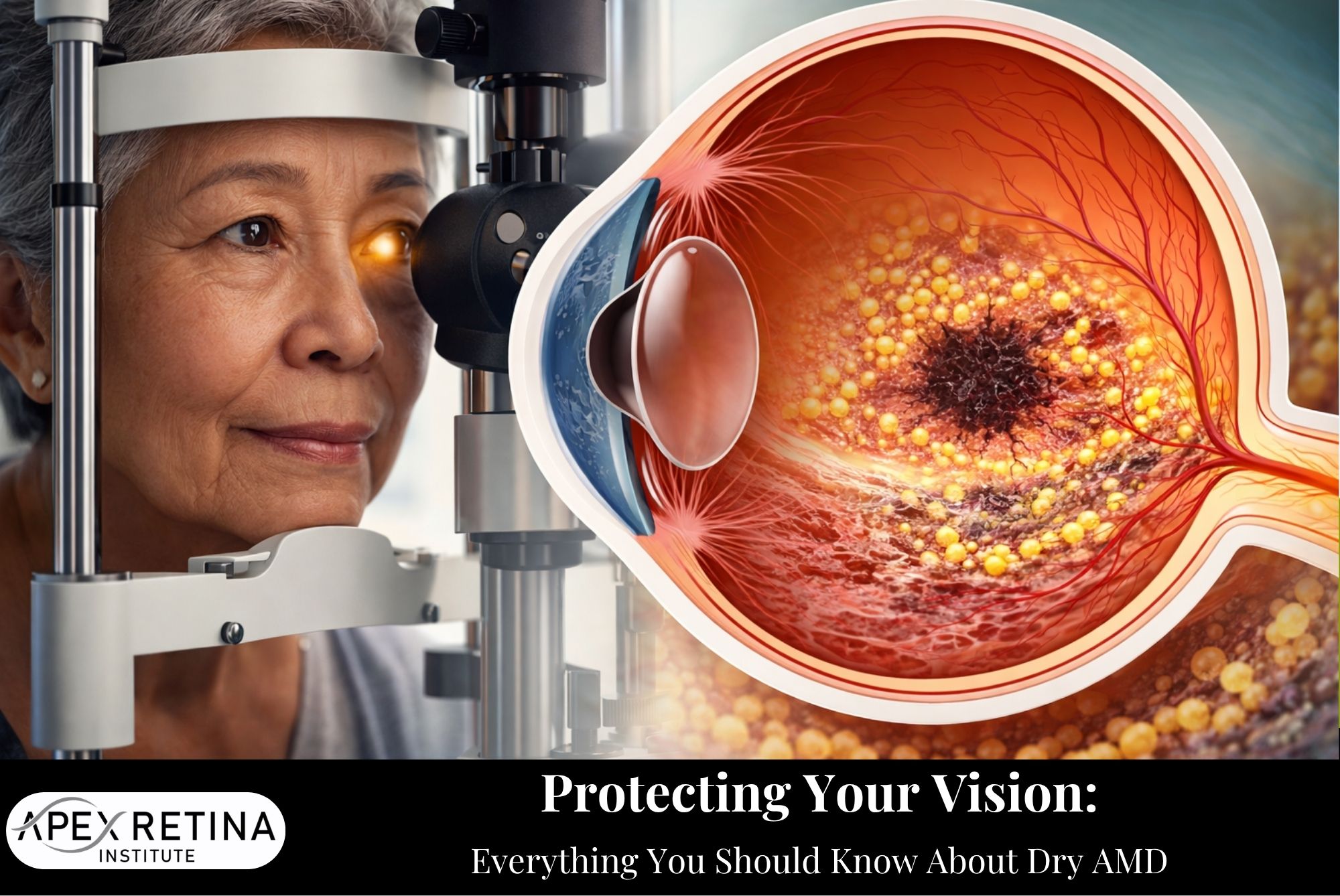
Age-related macular degeneration (AMD) is one of the leading causes of vision loss among adults over the age of 50. While it doesn’t typically cause complete blindness, it can significantly impact your central vision—making everyday activities like reading, driving, and recognizing faces more difficult. At Apex Retina Institute, patients receive expert, compassionate care tailored to preserving vision and improving quality of life.
In this guide, we’ll explore Dry Age-Related Macular Degeneration (Dry AMD)—the most common form of AMD—and what you need to know to protect your vision.
What Is Dry Age-Related Macular Degeneration?
Dry AMD is a progressive eye condition that affects the macula, the part of the retina responsible for sharp, central vision. Over time, the macula thins and accumulates small yellow deposits called drusen, leading to gradual vision loss.
There are two main types of AMD:
- Dry AMD (non-neovascular) – accounts for about 80–90% of cases
- Wet AMD (neovascular) – less common but more severe
Dry AMD typically progresses slowly, but early detection is key to slowing its advancement.
Causes and Risk Factors
While the exact cause of Dry AMD isn’t fully understood, several factors increase your risk:
- Age (50+)
- Genetics and family history
- Smoking
- High blood pressure or cardiovascular disease
- Poor diet lacking antioxidants
- Prolonged sun exposure
Understanding your risk factors can help you take preventive measures early.
Symptoms of Dry AMD
Dry AMD often develops without noticeable symptoms in its early stages. As the condition progresses, you may experience:
- Blurry or fuzzy central vision
- Difficulty reading or recognizing faces
- Need for brighter lighting
- Straight lines appearing wavy or distorted
- A dark or empty spot in the center of vision (advanced stages)
If you notice any of these symptoms, it’s important to schedule an eye exam promptly.
Stages of Dry AMD
Dry AMD progresses through three stages:
1. Early Stage
- Presence of small drusen
- No noticeable vision loss
2. Intermediate Stage
- Larger drusen and/or pigment changes
- Mild vision disturbances
3. Advanced Stage (Geographic Atrophy)
- Significant damage to the macula
- Noticeable central vision loss
Diagnosis
At Apex Retina Institute, advanced diagnostic tools are used to detect and monitor Dry AMD, including:
- Dilated eye exams
- Optical Coherence Tomography (OCT)
- Fundus photography
- Amsler grid testing
Early diagnosis allows for more effective management and preservation of vision.
Treatment and Management Options
While there is currently no cure for Dry AMD, several strategies can help slow its progression:
1. Nutritional Supplements (AREDS2 Formula)
Clinical studies have shown that certain vitamins and minerals can reduce the risk of progression:
- Vitamin C & E
- Zinc
- Copper
- Lutein & Zeaxanthin
2. Lifestyle Modifications
- Quit smoking
- Eat a diet rich in leafy greens and omega-3 fatty acids
- Maintain healthy blood pressure and cholesterol levels
- Wear UV-protective sunglasses
3. Regular Monitoring
Routine eye exams help detect changes early and allow timely intervention.
4. Emerging Treatments
New therapies and clinical trials are ongoing, offering hope for future treatment advancements.
Why Choose Apex Retina Institute?
At Apex Retina Institute, patients benefit from:
- Board-certified retina specialists
- State-of-the-art diagnostic technology
- Personalized treatment plans
- Compassionate, patient-centered care
Their team is dedicated to preserving your vision and helping you maintain independence and quality of life.
Frequently Asked Questions (Q&A)
Q1: Is Dry AMD the same as blindness?
No. Dry AMD affects central vision but typically does not cause total blindness. Peripheral vision is usually preserved.
Q2: Can Dry AMD turn into Wet AMD?
Yes. In some cases, Dry AMD can progress to Wet AMD, which is more aggressive and requires immediate treatment.
Q3: How often should I get my eyes checked?
If you are over 50 or at risk, you should have a comprehensive eye exam at least once a year—or more frequently if recommended by your specialist.
Q4: Are there symptoms in early Dry AMD?
Most people experience no symptoms early on, which is why regular eye exams are essential.
Q5: Can diet really help slow AMD?
Yes. A diet rich in antioxidants, leafy greens, and omega-3 fatty acids can support retinal health and may slow progression.
Q6: What is geographic atrophy?
It is the advanced stage of Dry AMD where parts of the macula deteriorate, leading to significant central vision loss.
Q7: Can vision be restored once lost?
Currently, vision loss from Dry AMD cannot be reversed, but progression can be slowed with proper care and monitoring.
Q8: Should I take supplements without consulting a doctor?
No. Always consult your retina specialist before starting supplements to ensure they are appropriate for your condition.
Take the Next Step Toward Protecting Your Vision
If you or a loved one are experiencing symptoms of Dry AMD or are at risk, early evaluation is crucial. The expert team at Apex Retina Institute is here to help you every step of the way.
Contact Information
Apex Retina Institute
2880 Atlantic Ave #290
Long Beach, CA 90806
Phone: (562) 534-1777
Website: apexretinainstitute.com
Request An Appointment:
https://apexretinainstitute.com/appointments/