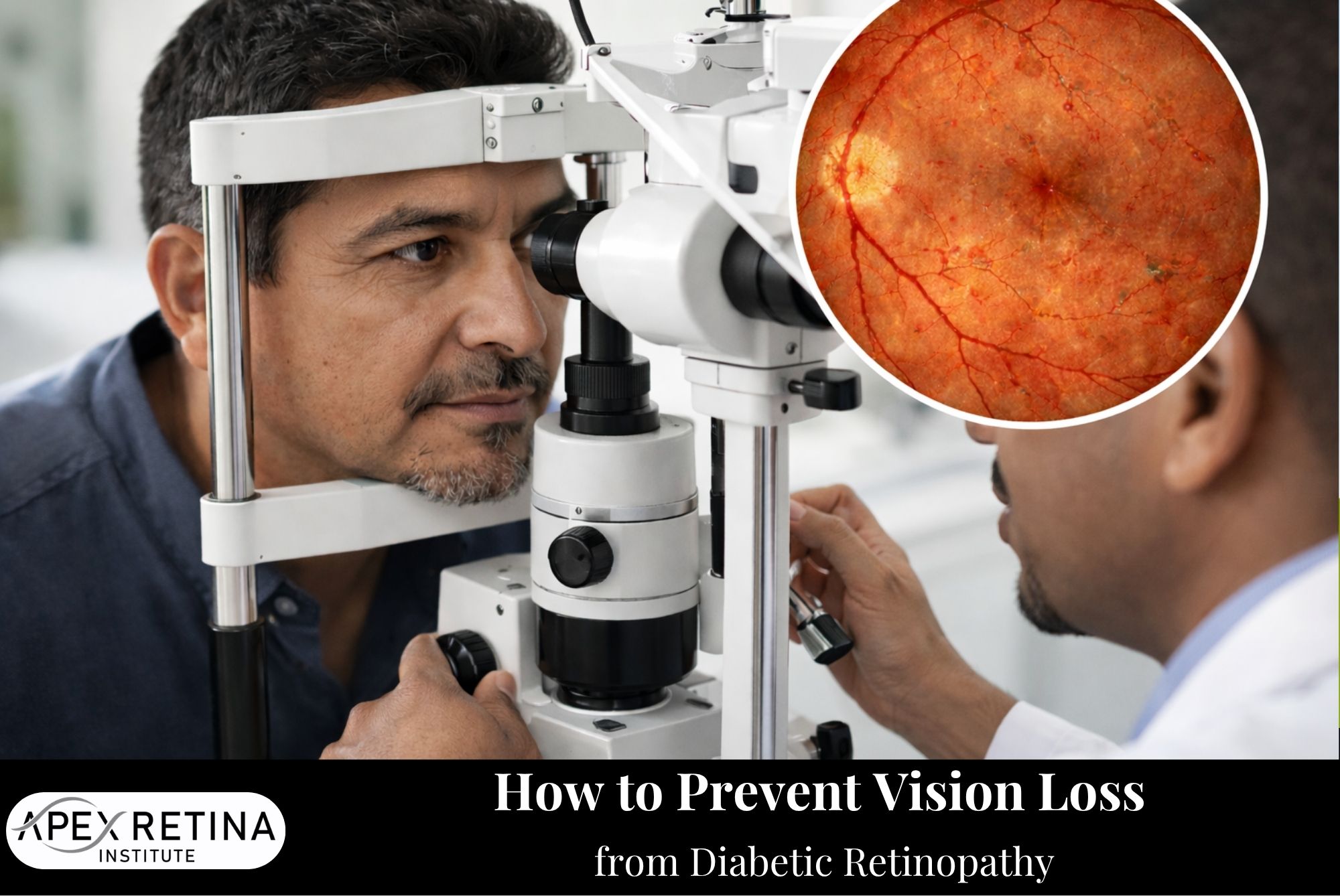
 Diabetes affects millions of people worldwide, and one of its most serious complications is diabetic retinopathy—a leading cause of vision loss in adults. At Apex Retina Institute, we are dedicated to helping patients detect, manage, and treat this condition early to preserve long-term eye health.
In this comprehensive guide, we’ll walk you through everything you need to know about diabetic retinopathy, including causes, symptoms, treatments, and prevention strategies.
What Is Diabetic Retinopathy?
Diabetic retinopathy is a condition that occurs when high blood sugar levels damage the blood vessels in the retina—the light-sensitive tissue at the back of your eye. Over time, these damaged vessels can leak, swell, or close off completely, impairing vision.
In advanced stages, abnormal new blood vessels may grow on the retina, leading to severe complications such as retinal detachment or vision loss.
Causes and Risk Factors
The primary cause of diabetic retinopathy is prolonged high blood sugar levels associated with diabetes. However, several factors can increase your risk:
- Duration of diabetes (risk increases over time)
- Poor blood sugar control
- High blood pressure
- High cholesterol
- Smoking
- Pregnancy (in diabetic patients)
Stages of Diabetic Retinopathy
Diabetic retinopathy progresses in stages:
1. Mild Nonproliferative Retinopathy
Small areas of balloon-like swelling (microaneurysms) appear in retinal blood vessels.
2. Moderate Nonproliferative Retinopathy
Blood vessels that nourish the retina begin to swell and distort.
3. Severe Nonproliferative Retinopathy
Many blood vessels become blocked, depriving the retina of blood supply.
4. Proliferative Diabetic Retinopathy (PDR)
New, abnormal blood vessels grow, which can bleed into the eye and cause serious vision loss.
Symptoms to Watch For
Diabetic retinopathy often develops without noticeable symptoms in its early stages. As it progresses, you may experience:
- Blurred or fluctuating vision
- Dark spots or floaters
- Impaired color vision
- Difficulty seeing at night
- Vision loss
Important: Regular eye exams are critical because symptoms may not appear until the condition is advanced.
How Is Diabetic Retinopathy Diagnosed?
At Apex Retina Institute, diagnosis involves a comprehensive eye exam, which may include:
- Dilated eye exam
- Optical coherence tomography (OCT)
- Fluorescein angiography
- Retinal imaging
These tests allow specialists to detect even early signs of retinal damage.
Treatment Options
Treatment depends on the severity of the condition:
Early Stages
- Monitoring and improved diabetes management
- Blood sugar, blood pressure, and cholesterol control
Advanced Stages
- Anti-VEGF injections to reduce abnormal blood vessel growth
- Laser therapy to seal leaking vessels
- Vitrectomy surgery to remove blood or scar tissue
Early intervention is key to preventing irreversible vision loss.
Prevention Tips
While diabetic retinopathy can’t always be avoided, you can significantly reduce your risk:
- Maintain healthy blood sugar levels
- Schedule annual comprehensive eye exams
- Manage blood pressure and cholesterol
- Quit smoking
- Follow your doctor’s treatment plan
Why Choose Apex Retina Institute?
At Apex Retina Institute, we combine advanced technology with personalized care to provide the highest level of retinal treatment. Our experienced specialists are committed to early detection and effective management of diabetic eye conditions.
Frequently Asked Questions (Q&A)
Q: Can diabetic retinopathy be reversed?
A: In early stages, progression can be slowed or halted with proper diabetes management. Advanced damage may not be reversible, but treatment can prevent further vision loss.
Q: How often should diabetics get eye exams?
A: At least once a year, or more frequently if recommended by your retina specialist.
Q: Is diabetic retinopathy painful?
A: No, it is usually painless, which is why regular screenings are essential.
Q: Can you have diabetic retinopathy without symptoms?
A: Yes. Many patients have no symptoms until the disease has progressed significantly.
Q: What is the best treatment for diabetic retinopathy?
A: Treatment varies by stage but may include injections, laser therapy, or surgery.
Q: Does controlling blood sugar really help?
A: Absolutely. Good blood sugar control is one of the most effective ways to prevent or slow the disease.
Q: Who is most at risk?
A: Anyone with diabetes—Type 1 or Type 2—is at risk, especially those with long-standing or poorly controlled diabetes.
Contact Apex Retina Institute
Apex Retina Institute
2880 Atlantic Ave #290
Long Beach, CA 90806
📞 Phone: (562) 534-1777
🌐 Website: apexretinainstitute.com
📅 Request an Appointment: https://apexretinainstitute.com/appointments/