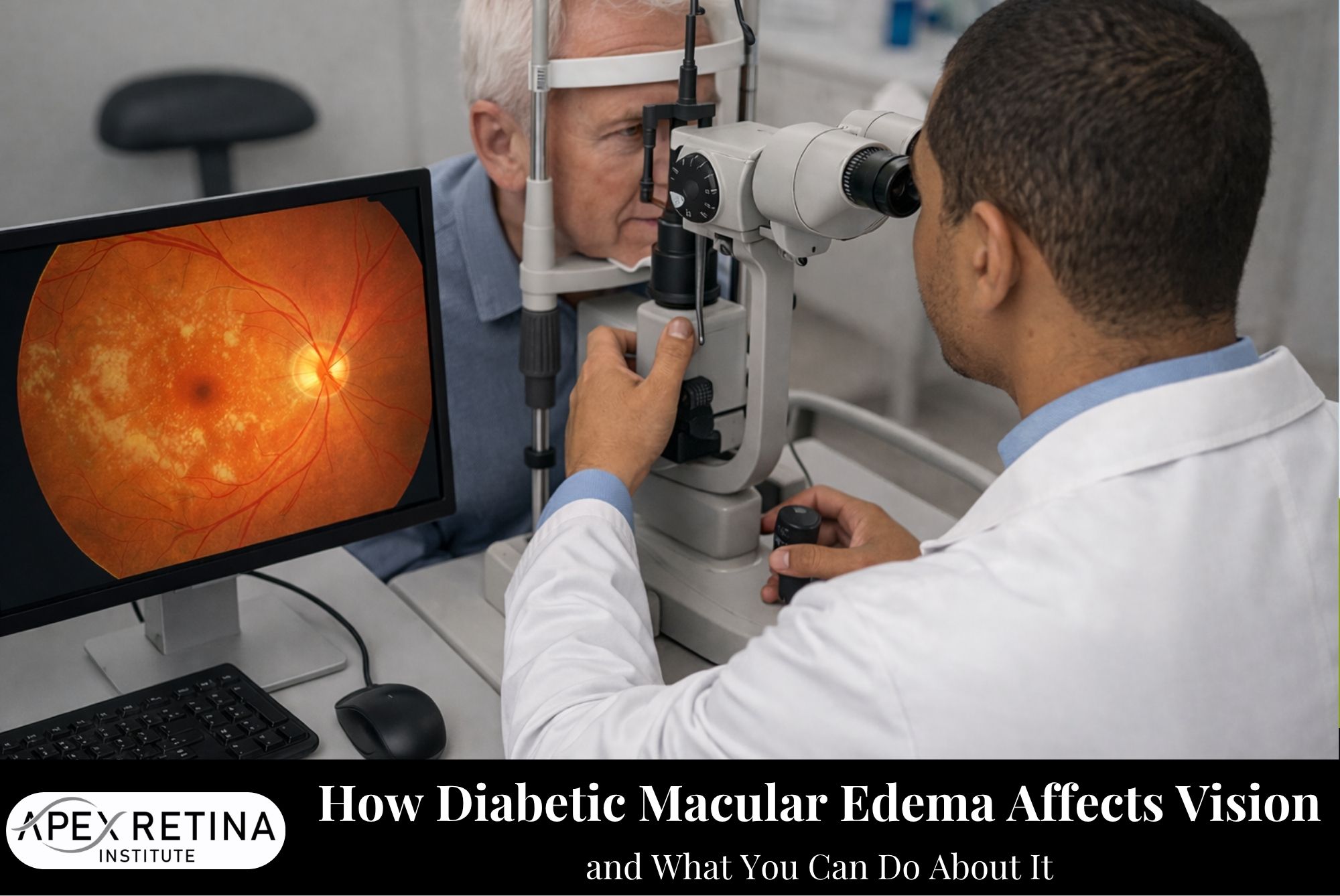
Diabetic Macular Edema (DME) is one of the leading causes of vision loss among individuals with diabetes. As diabetes continues to affect millions of people nationwide, awareness and early intervention are critical to preserving vision and maintaining quality of life. At Apex Retina Institute, patients receive expert, specialized care focused on diagnosing and treating retinal conditions like DME with precision and compassion.
What Is Diabetic Macular Edema?
Diabetic Macular Edema is a complication of diabetic retinopathy, a condition caused by damage to the blood vessels in the retina due to prolonged high blood sugar levels. The macula—the central part of the retina responsible for sharp, detailed vision—can swell when these damaged blood vessels leak fluid. This swelling leads to blurred or distorted vision and, if untreated, can result in permanent vision loss.
What Causes Diabetic Macular Edema?
DME develops as a result of chronic diabetes. Over time, elevated blood sugar weakens retinal blood vessels, causing them to:
- Leak fluid into the macula
- Become blocked, reducing oxygen supply
- Trigger abnormal blood vessel growth
Risk factors include:
- Poor blood sugar control
- High blood pressure
- High cholesterol
- Long duration of diabetes
- Smoking
Symptoms of Diabetic Macular Edema
DME often develops gradually, and symptoms may not be noticeable in the early stages. As the condition progresses, patients may experience:
- Blurred or wavy central vision
- Colors appearing faded or washed out
- Difficulty reading or recognizing faces
- Dark or blank spots in vision
Because symptoms can be subtle at first, regular eye exams are essential—especially for individuals with diabetes.
How Is Diabetic Macular Edema Diagnosed?
At Apex Retina Institute, advanced diagnostic technology allows for precise detection and monitoring of DME. Common diagnostic tools include:
- Optical Coherence Tomography (OCT): Provides detailed cross-sectional images of the retina
- Fluorescein Angiography: Highlights leaking blood vessels
- Comprehensive Dilated Eye Exam: Evaluates overall retinal health
Early detection allows for more effective treatment and better outcomes.
Treatment Options for Diabetic Macular Edema
Modern treatments for DME are highly effective and continue to evolve. At Apex Retina Institute, treatment plans are customized for each patient and may include:
1. Anti-VEGF Injections
These medications reduce swelling by blocking proteins that cause abnormal blood vessel growth and leakage.
2. Steroid Injections or Implants
Steroids help reduce inflammation and fluid buildup in the retina.
3. Laser Therapy
Focal laser treatment seals leaking blood vessels and stabilizes vision.
4. Vitrectomy Surgery
In advanced cases, surgery may be necessary to remove vitreous gel and relieve traction on the retina.
The Importance of Early Treatment
DME is manageable, especially when detected early. Delaying treatment can lead to irreversible vision loss. Routine eye exams and proper diabetes management—such as controlling blood sugar, blood pressure, and cholesterol—play a critical role in prevention and treatment success.
Why Choose Apex Retina Institute?
Apex Retina Institute is dedicated to providing cutting-edge retinal care with a patient-first approach. Their team of specialists uses the latest technology and evidence-based treatments to ensure optimal outcomes for patients with diabetic eye conditions.
Frequently Asked Questions (Q&A)
Q: Can Diabetic Macular Edema be cured?
A: While DME cannot always be completely cured, it can be effectively managed with treatment. Many patients experience improved or stabilized vision with proper care.
Q: How often should diabetics get eye exams?
A: People with diabetes should have a comprehensive dilated eye exam at least once a year, or more frequently if recommended by their eye doctor.
Q: Are eye injections painful?
A: Anti-VEGF injections are generally well-tolerated. Numbing drops are used to minimize discomfort, and most patients report only mild pressure.
Q: Will I lose my vision if I have DME?
A: Not necessarily. With early detection and proper treatment, many patients maintain functional vision and prevent severe vision loss.
Q: How long does treatment last?
A: Treatment duration varies depending on the severity of the condition. Some patients require ongoing therapy, while others may stabilize after a series of treatments.
Q: Can lifestyle changes help?
A: Yes. Managing blood sugar, maintaining a healthy diet, exercising regularly, and avoiding smoking can significantly reduce the progression of DME.
Take Control of Your Eye Health Today
If you or a loved one has diabetes, protecting your vision starts with proactive care. Diabetic Macular Edema can be managed effectively with expert treatment and regular monitoring.
Contact Information
Apex Retina Institute
2880 Atlantic Ave #290
Long Beach, CA 90806
Phone: (562) 534-1777
Website: apexretinainstitute.com
Request An Appointment: https://apexretinainstitute.com/appointments/